
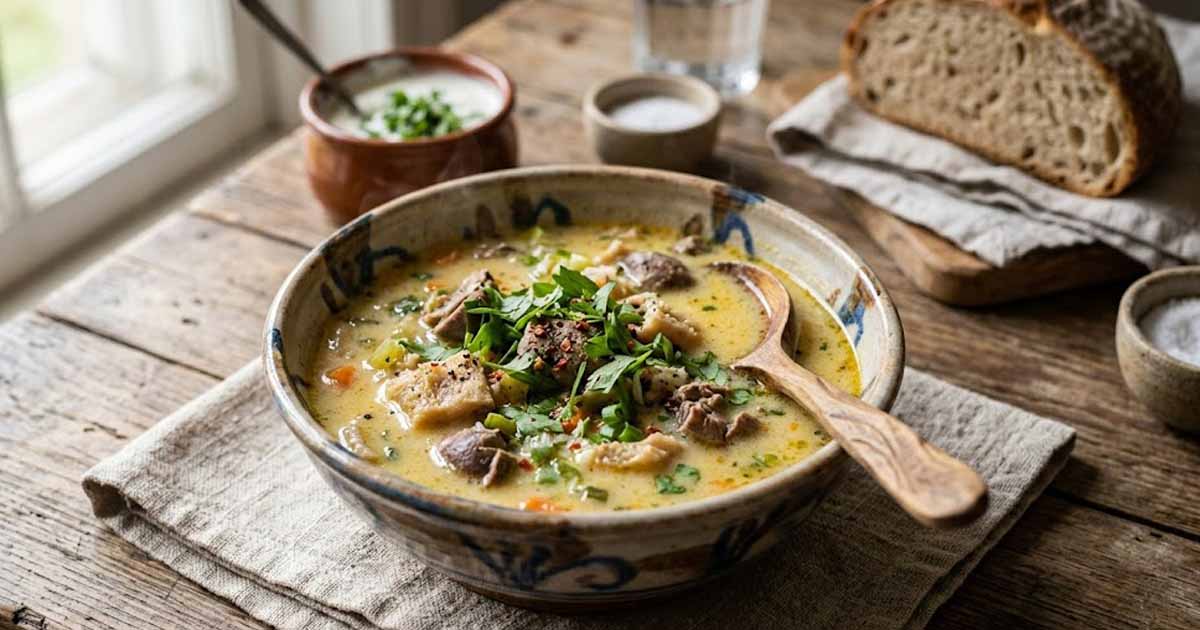
 In the heart of every Romanian home during the Easter holidays, one aroma stands above all others: the bright, herbaceous scent of Ciorbă de Miel. This traditional lamb soup is more than just a starter; it is the official herald of spring and the grand finale to the long Lenten fast. Combining tender cuts of lamb with an explosion of fresh garden greens, this dish captures the very essence of a Romanian family gathering.
A Tradition Carved in History
The roots of this soup go deep into Romania’s spiritual and pastoral history. Linked to the ancestral tradition of the Easter lamb, the dish symbolizes renewal and the abundance of the new season. While every region—from the rolling hills of Moldavia to the rugged peaks of Transylvania—claims its own secret twist, the core philosophy remains the same: respect for the ingredient and a celebration of freshness.
The Art of the Spring Harvest
What truly sets this soup apart is the “green force” of spring. It isn’t just about the meat; it’s about the massive handfuls of fresh lovage, scallions, and green garlic that hit the pot. The hallmark of an authentic Ciorbă de Miel is its delicate balance of creaminess and acidity. Traditionally soured with borș (fermented wheat bran) and thickened with a rich liaison of sour cream and egg yolks, every spoonful offers a velvety texture that is both light and incredibly satisfying.
History and Origins
The tradition of Lamb Soup is deeply intertwined with the ancestral custom of the Easter sacrifice, a practice with biblical roots adopted into Romanian Orthodox culture. In Romania, this soup traditionally opens the Easter feast, symbolizing the freshness of spring through its abundant use of seasonal greens and marking the return to meat after the fast. While recipes vary slightly across Romania’s diverse regions, the core elements remain constant: succulent lamb, a wealth of fresh herbs, and that distinct, refreshing sour finish.
Romanian Easter Lamb Soup
Ingredients
Equipment
Method
Step1: Preparing the Lamb
- Clean and Prep: Rinse the lamb meat thoroughly under cold running water. Cut it into soup-ready pieces, roughly 1.5 inches (3-4 cm) in size.Boil and Skim: Place the meat in a large pot with 4 liters of cold water and bring to a boil.Clarify the Broth: As it begins to boil, carefully skim off the foam that rises to the surface. Reduce the heat and simmer gently for 30–40 minutes.
Step 2: Preparing the Vegetables
- Chop the Base: While the meat simmers, peel and wash yourvegetables. Dice the carrots, parsnip, and celery root into smallcubes or rounds. Finely dice the onion and bell peppers.Prep the Rest: Cut the potatoes into 1-inch cubes. Finelychop the green onions, lovage, and parsley.
Step 3: Cooking the Soup
- Add Root Veggies: Once the meat is partially cooked, addthe carrots, parsnip, celery root, and onion to the pot. Simmer for15 minutes.Add Potatoes and Peppers: Stir in the diced bell peppersand potatoes. After 10 minutes, add the peas and the rinsed rice.Flavor and Sour: When the ingredients are nearly tender,stir in the tomato paste and simmer for 5 minutes. Pour in the borș(or sauerkraut juice) and boil for an additional 5 minutes. Seasonwith salt and pepper to taste.
Step 4: The Final Touch (The Liaison)
- Temper the Eggs: In a separate bowl, whisk the eggs. Slowlyladle a few spoonfuls of the hot soup into the eggs, whiskingconstantly to prevent curdling.Blend: Pour this mixture back into the pot, stirringgently.Infuse Aromatic Herbs: Stir in half of the freshly choppedherbs. Turn off the heat, cover the pot, and let it rest for 10minutes to allow the flavors to marry.
Step 5: Serving
- Garnish: Serve the soup hot, topped with a generous dollopof sour cream and the remaining fresh herbs.Optional Spice: Offer hot peppers on the side for those whoenjoy a bit of extra heat.
Notes
Recipe Variations: Giving it a Twist
If you want to experiment with the traditional base, here are four popular ways to adapt the recipe:- Lamb Soup "à la Grec": Swap the sour cream for 5.3 oz (150g) of Greek yogurt. Infuse with dried oregano and fresh mint. Serve with lemon slices and black olives for a Mediterranean touch.
- Spring Greens Variation (Lobodă or Sorrel): Replace some of the root vegetables with 10 oz (300g) of orach (lobodă) or sorrel. Use green garlic for a sharper aroma and traditional borș for the sour finish.
- Tarragon Infusion: Replace the lovage with fresh tarragon. Add two tablespoons of sour cream directly into the pot and a crushed clove of garlic for an earthy, Transylvanian-style flavor.
- Light Yogurt & Egg Liaison: Whisk 2 eggs with 7 oz (200g) of yogurt and add it at the very end (tempered). Skip the extra sour cream when serving to keep it light and zesty.
Nutrition Facts (Per 10 oz / 300 ml serving)
- Classic Version: ~220-250 kcal | Protein: 18-20g | Fat: 12-15g | Carbs: 10-12g
- Light Version: (Lean meat, low-fat yogurt, 1 tbsp oil) | ~180-200 kcal
- Hearty Version: (Extra meat, potatoes, and extra sour cream) | ~300-350 kcal
- Vegetarian "Fasting" Alternative: (Mushrooms instead of meat, olive oil) | ~120-150 kcal
Frequently Asked Questions (FAQ)
What are the best cuts of lamb for soup? The shoulder, neck, and breast are ideal. These "bone-in" cuts provide the necessary fat and gelatin to create a rich, flavorful broth. While leg of lamb can be used, it tends to be leaner and tougher when boiled. How can I tone down the intense "lamb" flavor? If you prefer a milder taste:- Soak the meat in cold milk for 1-2 hours before cooking.
- Add aromatic herbs like rosemary or thyme to the first boil.
- Add a tablespoon of vinegar to the initial boiling water, then discard that water and start fresh.
Poftă Bună! (Enjoy your meal!) This soup is a true Romanian masterpiece—hearty, zesty, and filled with the nostalgia of childhood springs. Serve it piping hot with a dollop of sour cream and a slice of crusty sourdough bread.