
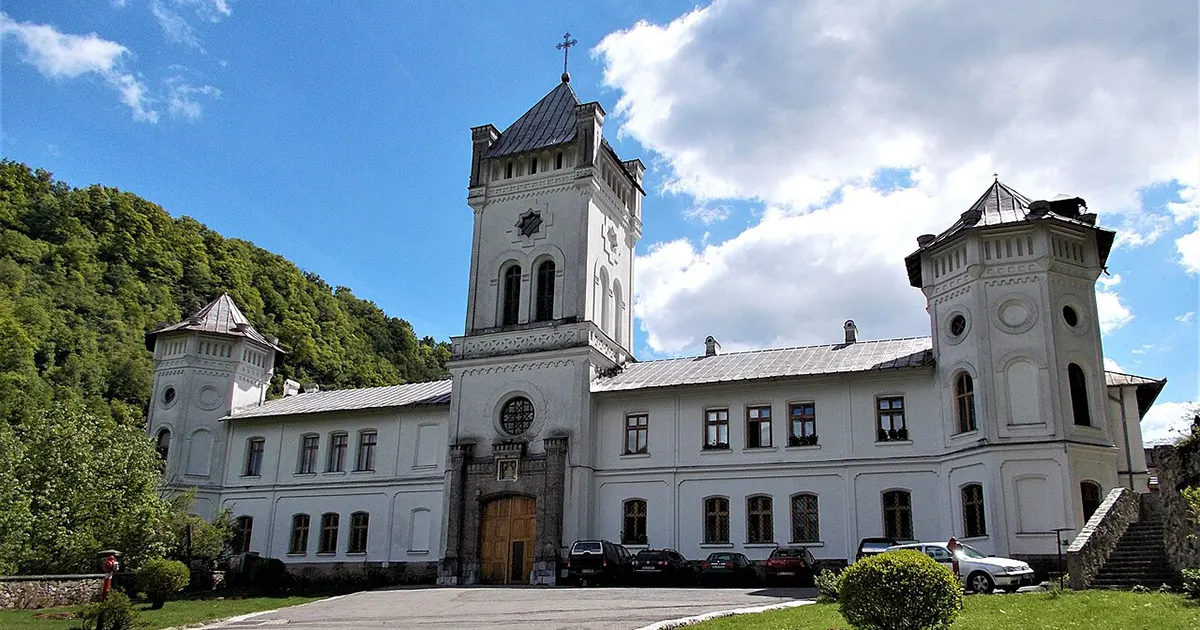
Nestled at the foot of the Vâlcan Mountains, surrounded by wild forests and dramatic cliffs, Tismana Monastery stands as the oldest monastic settlement in Wallachia still in operation. For over six centuries, this “lavra” founded by Saint Nicodemus has been a beacon of Romanian Orthodoxy, drawing pilgrims from across the country who seek spiritual solace and a connection to the nation’s deepest roots.
The monastery’s imposing stone walls, resembling a medieval fortress, protect more than just a community of nuns; they guard a priceless cultural and historical heritage. The Byzantine architecture, with its red brick and stone facades, creates an atmosphere of solemnity that encourages introspection. For the modern traveler, a pilgrimage to Tismana is an invitation to leave the noise of the world behind and embrace the profound silence of the mountains, broken only by the nearby Stârmina waterfall.
Following the Footsteps of Saint Nicodemus
The heart of the pilgrimage experience at Tismana revolves around Saint Nicodemus, the visionary who chose this “mouth of the cave” to build a spiritual monument. Faithful visitors come to pray at the reliquary containing the saint’s index finger and his lead cross, objects revered for their healing history.
Beyond the liturgical services in the main church, many pilgrims make the short climb to the cave situated just above the monastery. This small grotto is where Saint Nicodemus lived in ascetic solitude, and it remains a place of intense prayer. Inside the monastery complex, the Treasury Museum offers a glimpse into the past, displaying ancient cult objects, exquisite embroideries, and fragments of original frescoes that have survived centuries of trials.
The Hidden Treasure and Natural Splendor
Tismana is also a place where sacred history intersects with national heroism. In a nearby cave, the National Bank of Romania Museum tells the fascinating story of how over 200 tons of gold were hidden here during World War II to protect the national treasury from the advancing front. This unique blend of spirituality and history makes the site a significant landmark for any visitor.
The journey to Tismana is as beautiful as the destination itself. The road from Târgu Jiu winds through lush forests of edible chestnut trees, a rare botanical feature in Romania. Whether you visit during the Great Feast of the Dormition or on a quiet weekday, the monastery offers a rare sense of peace and a chance to experience the authentic traditions of the Oltenia region in their most sacred form.