
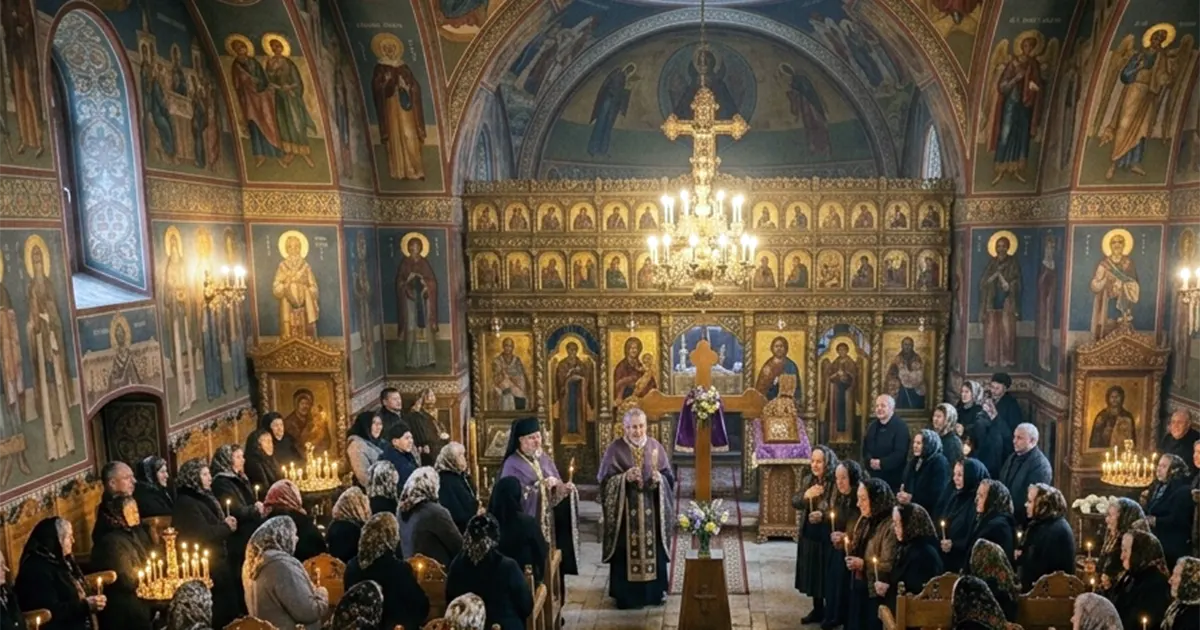
 In the spiritual landscape of the Eastern Orthodox tradition, Holy Thursday (also known as Maundy Thursday) represents a profound transition. It is the day when the domestic preparations of the household meet the solemnity of the Church’s most moving rituals. Far beyond a simple date on the calendar, it is a day defined by the transformation of the ordinary—bread, wine, and eggs—into symbols of eternal significance.
The theological weight of the day rests on the Last Supper and the institution of the Eucharist. However, in the rural heartlands and traditional homes of Romania, Holy Thursday is equally defined by a rich tapestry of folklore that has survived for centuries, blending Christian devotion with ancient ancestral respect.
The Mystery of the Crimson Egg
The most iconic image of this day is the dyeing of the red eggs. According to local lore, Holy Thursday is the only window of time where the eggs dyed will remain fresh and untainted throughout the entire year. The vibrant red color is not merely decorative; it is a visceral reminder of the sacrifice on the Cross and the subsequent victory of life over death.
While modern times have introduced a rainbow of colors to the Easter basket, the “Crimson Egg” remains the spiritual standard. In many villages, the first egg dyed is considered a protector of the home, often kept near an icon to ward off storms and misfortune until the following spring.
The Service of the 12 Gospels
As the sun sets, the focus shifts from the kitchen to the village church for the Service of the 12 Gospels. This is a marathon of faith, where the longest biblical passages detailing Christ’s passion, betrayal, and trial are read aloud. It is a time of deep “introspeccție” (introspection), where the community stands in communal silence, reliving the darkest hours of the Passion narrative.
A unique local custom involves tying knots on a string for each Gospel read, a physical way for the faithful to “bind” their prayers and carry the protection of the service with them.
Ritual Fires and the Ancestral Veil
Perhaps the most hauntingly beautiful tradition of Holy Thursday is the lighting of the Ritual Fires. Tradition holds that on this night, the gates of the “other world” open, and the spirits of the departed return to their former homes.
To welcome them, small fires are lit in courtyards or cemeteries using dry branches and hazelwood. These fires are meant to “warm” the souls of the ancestors and light their way. This practice highlights a core element of the local identity: the belief that the Resurrection is not just for the living, but a celebration that unites all generations, past and present.